Tuesday, March 7, 2017

Dannel's Logic is Shot

It's well-documented that Dannel Malloy (D, Connecticut) is the worst Governor in the nation.  For a state that leans pretty far to the left, you would think that a man who was once a dream Governor for leftists would be a little more well-liked, but he has the second-worst approval rating (26% per morningconsult.com) out of all of the nation's Governors.  The only Governor in the nation with a worse approval rating is Sam Brownback (R, Kansas), probably because people in Kansas like his last name less than people like Malloy's first name.  That dude is the only person I know of named Dannel.  I wonder if his parents named him Daniel but legally changed his name when he just kept spelling his name wrong on all his papers when he was a kid.  But mostly I'm just here today to talk about why his proposed gun permit fee increases are dumber than his name.

In large part because of Malloy's fiscally irresponsible policies during a time in which the economy has supposedly been improving, Connecticut is estimated to end up with a nearly two billion dollar budget deficit in the next fiscal year.  Naturally, as a leftist, one of the solutions he's come up with to help chip away at the deficit is to make people with guns (or those who want to obtain them legally) pay more money to have permits for these guns.  He wants renewal fees for pistol permits (which are good for five years) to more than quadruple, from $70 to $300, he wants first time permits to be issued for $370 instead of $140, and he wants background checks to obtain a permit for the first time to go up to $75 from $50 (per New Haven Register article).  The knee-jerk reaction for many leftists?  Cheers.  Yeah, stick it to those damn gun owners exercising their first amendment in a way in which it was never intended, right!?  Well, let's follow what this policy would actually do if implemented...

People who would not be impacted by this policy?  Criminals who obtain guns illegally anyway.  People who would be impacted by this policy?  Citizens who legally obtain guns and gun permits as required by the state of Connecticut, in order to exercise their rights.  And further breaking that down, is the fee hike really going to impact rich people?  No.  Not at all.  Middle and upper-middle class?  Not really.  I mean, it's a slight annoyance.  I consider myself part of that group, and I'm not happy that I may have to pay a few hundred dollars extra every five years for a permit renewal of my God-given right, but it's a minor inconvenience for me.  Not a big deal.  That leaves the poor and the lower-middle class, who disproportionately live in more dangerous areas and are disproportionately minorities.  Malloy is either out to get these people, hasn't thought this through, or doesn't care about the consequences as long as it gets money to the state and looks like he's being "tough on guns."  My guess is the third option here, maybe the second.

The main problem is that the poorest people in the state who want to own guns, probably in large part for home defense, would have three options if Malloy's proposal were to pass: pay for the permit even though you can't really afford it and may have to forfeit other important things, don't pay for the permit and don't get a gun, or don't pay for the permit and possess a gun anyway (possible future felony conviction).  I don't really see another option there with the proposal as-is.  But hey, leftists are all about giving away things for free, right?  If healthcare should be free for those who want it but can't afford it and college education should be free for those who want it but can't afford it, shouldn't guns and gun permits be free for those who want them and can't afford them?  I mean, healthcare and college education aren't even mentioned in the bill of rights, but the right to bear arms is the second amendment.  Access to buying guns and gun permits doesn't mean you're guaranteed to have guns and gun permits, right?  And no, I don't think that's the actual solution, but see my point?

The same amount of money can be raised by the state via a much, much, much smaller increase in the cost of driver's license renewals every six years (except that driving is a privilege, not a right).  Or, you know, maybe we wouldn't have such a mountainous deficit if Malloy and company didn't scare away businesses and do such a shitty job running the state in the first place.  Connecticut is already one of the worst states in the nation for taxes and fees.  The solution isn't to make that worse.  The solution is to fix the problems that cause the state to hemorrhage money.  And yes, it's a damn shame that we have some of the most insanely wealthy and incredibly poor areas in the whole nation within our tiny state.  If you don't believe me, try comparing Bridgeport public schools with public schools in Westport or Greenwich, just a short drive away.  Stark contrast.  Sad!  (Shout out to Trump tweets.)

Whatever we're doing here isn't working and is rotten to the core.  Maybe it's time for the right, the left, and everyone in between to get together and come up with some real solutions to enact positive changes in the state.  Finding more and more ways to charge Connecticut residents money that the state squanders isn't fixing the problems we have.  We'll just keep piling up deficits.  It's like a doctor prescribing pain pills to treat a torn ACL instead of performing surgery to fix the torn ACL.  And also the doctor is making it harder for you to exercise rights you have that he isn't particularly fond of.  Especially if you're poor.

Sunday, February 19, 2017

Fake News is Real

Fake news used to be largely relegated to parody news like The Onion, Weekend Update on SNL, The Daily Show, etc.  The goal was laughs, and everyone (mostly everyone anyway) knew that The Onion was fake news, intended as humor, while Weekend Update and The Daily Show were humorous commentary, mostly based on real news.  With the internet and the rise of social media came a lot of websites that are not trustworthy.  But it really wasn't until the 2016 election season that "fake news" became a regular phrase in the American lexicon.

What happened during the campaigns was that a lot of websites popped up, mostly originating from foreign countries, that were designed solely to generate clicks, and thus revenue.  This occurred largely through the fake articles from these sites being shared on platforms like Facebook.  It seemed that the fake articles that generated the most clicks and shares were those that favored Donald Trump and were anti-Hillary Clinton.  There were some that did the opposite too, but they seemed to be in the minority, and after Hillary Clinton lost the election and called out "fake news" as part of the reason she lost, the term took on a new meaning.

Facebook and other businesses vowed to fight fake news, and while most people from the political right, left, and everywhere in between agreed that fake news was a problem, they had different ideas of the best way to do that.  The term became politicized, and the right was uncomfortable that the companies that would be fighting fake news leaned left and could possibly target conservative sites and threaten free speech.  This wasn't entirely baseless, because very quickly, the definition of "fake news" was expanded by the left to include biased right-wing news outlets, some of which were real news with a biased slant (like The Blaze), others of which were largely real news with some questionable content (like Breitbart), and others which dealt with a lot of conspiracy theories (like Info Wars).  But the problem was that the definition was expanded beyond the sites that simply existed to generate clicks and cash with stories that were completely baseless, such that most thinking people could figure out they were fake with some very quick research (though considering the number of times these stories got shared, it appears that there were a lot of people not doing that).

This, like most things that happened during the 2016 campaign, ended up backfiring spectacularly for the left.  Because the right decided to get in on the game, calling out left-leaning news outlets as fake news, and targeting the CNN, already declining in credibility after some unfortunate incidents (collusion with Hillary's campaign, for example), as the same.  President Donald Trump even called CNN fake news.  And thus, the definition of fake news has essentially become meaningless, because it now means news that is biased that someone doesn't like the slant of, news that leaves out key information in stories to fit a particular narrative, or news organizations that sometimes make mistakes and run stories that turn out to be inaccurate.  Technically, fake means something that is not genuine, so pairing "fake" with "news" yields a pretty broad definition, but the right successfully took the term away from the left, which had hijacked it, and rendered it cliche.

So what are truth-seekers to do in the age of alternative facts, rampant bias, overreactions, division, half-truths, and outright fake news?  I've been wrestling with that question myself for sometime.  I don't have a magic bullet answer, but here's what I've come up with:

- Go to multiple news sources for stories you deem important.  If you see something on left-leaning news, see how the story is covered on right-leaning news, and vice versa.

- Whenever possible, seek out a direct source, such as C-SPAN footage, videos of events in question, or direct interviews with a person in the news.

- Seek out sites that are balanced.  Everyone is biased to some extent, but some are clearly more biased than others.  Don't spend too much time on Breitbart or Huffington Post.

- Avoid sites that are totally ridiculous and avoid sharing news stories on social media that fit your narrative but are questionable in truthfulness and unconfirmed or not covered by multiple sources.

- Avoid clickbait.

- Know the difference between news and commentary.  Commentary on real news is a thing, and I am a fan of folks like Ben Shapiro and Steven Crowder for example, but I know that they are commentators who lean right (and in Crowder's case, he is also a comedian, so some of what he says is not to be taken seriously when his intent is humor).  Keith Olbermann and Bill Maher are a few commentators on the left.

- Here is my personal analysis of some major News Outlets...
Roughly center: Wall Street Journal, AP, Reuters, The Economist, USA Today
Slightly left: BBC, NPR, CBS, ABC, The Hill
Slightly right: The Fiscal Times
Firmly left: CNN, NBC/MSNBC, New York Times, Washington Post, The Atlantic
Firmly right: FOX, The Blaze
Far left: Huffington Post, The Guardian, Slate, Politico, Vox
Far right: Breitbart, The Daily Caller, Drudge Report
Insane left: Addicting Info
Insane right: Info Wars

Tuesday, February 7, 2017

Friday, January 20, 2017

Ten Best, Ten Worst: A Farewell to President Obama

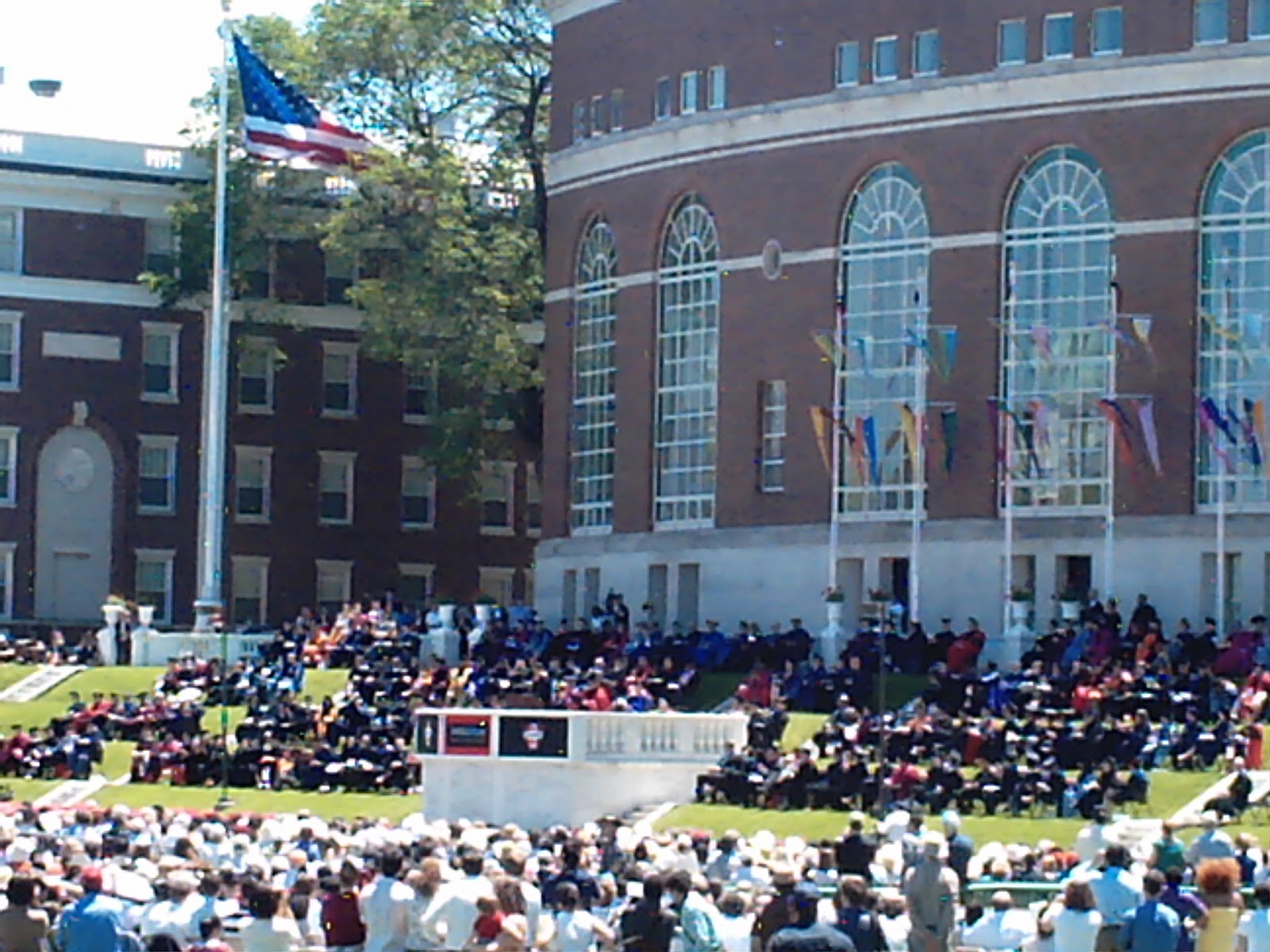
Donald Trump became our nation's 45th President at noon ET today.  It will be years until we can fully analyze President Barack Obama's place in the history books, but on the occasion of his departure, I offer both kind words and criticism, with 10 of the best things he did while in office and 10 of the worst things he did while in office.  You can't quite see him too clearly in the photo here, but this is Obama speaking at Wesleyan University's commencement the year after I graduated from there, when he was a Senator on the campaign trail in 2008...

NUMBER 10:
GOOD: Obama inspired the nation when he was elected as the first African-American President in a nation where a lot of black folks were slaves 150 years ago.  He proved that you can become the President no matter the color of your skin.
BAD: It's probably more perceived than it is real, but the media has portrayed racial tensions as somehow worsening, which is odd considering the most powerful man in the world for eight years was black and, for those of us who grew up in the 90s, where even us little white boys idolized Michael Jordan, Emmitt Smith, and Derek Jeter, racial tension was rarely on our minds.

NUMBER 9:
GOOD: Opening up and normalizing relations with Cuba was a good thing.  This does not mean that we're cool with those in power in Cuba (most of us anyway), but a lot of the sanctions that were lifted seemed entirely unnecessary, and I see no reason why we shouldn't try to at least get along with Cuba where we can and allow travel back-and-forth (and Cuban cigars for those who are into that).
BAD: Refusing to block the anti-Israel UN resolution during the lame duck period was, as I detailed in a recent blog post, disgraceful.  Israel is an important ally that we should stand behind, and the people the U.S. sided with by not blocking this resolution are people who literally want Israel wiped off the map.

NUMBER 8:
GOOD: Obama changed his views on same-sex marriage after being elected, supporting equal rights for them.  I view this as a positive thing because, although I am a Christian and fully agree with the Bible on the topic of gay marriage, I believe the government should stay out of marriage completely, recognizing equally every union as a civil union with the corresponding rights.  But if it does recognize marriage, everyone must be afforded the same rights, regardless of religion or sexual orientation.
BAD: With all of the focus on Russia attempting to help President Trump's candidacy, people may forget how terribly Obama handled Russia.  He allowed Russia and Putin to pretty much do whatever they wanted, at least until after Trump was elected.  Obama told Russia on a hot mic that he would have more flexibility once re-elected, he underestimated Russian threats while debating Mitt Romney, and he basically let Russia do what it wanted with Crimea, while ignoring serious issues in Syria and other places.

NUMBER 7:
GOOD: Obama is an honorable family man who carried himself with class and dignity during his presidency, showing a good sense of humor, strength, and eloquence, and never having any credible scandal regarding infidelity during his eight years in office.  He also seems like an approachable, down-to-earth person, and I would like to sit down and have a beer with the man.
BAD: That being said, he never should have been given the Nobel Peace Prize.  He is the first President who has been at war during his entire eight years in office, we're bombing a lot of places most Americans don't even realize we're bombing, and he teamed up with Hillary Clinton to royally screw up Libya.

NUMBER 6:
GOOD: The rate of Veteran homelessness declined under President Obama, and there are more Veteran college tuition assistance programs available.
BAD: The VA hospitals have been a disaster, with insane wait times and Veterans dying in queue.  While not entirely Obama's fault, more should have been done to prevent and fix these issues.

NUMBER 5:
GOOD: Some of the provisions in Obamacare are great, such as insurance companies having to cover people who have preexisting conditions, as well as allowing folks to stay on their parents' plan until they are 26 if they need to.  When I graduated in May 2007, I was 21 and I was dropped from my health insurance plan the very next day because I was no longer a student.  That should not be a thing that happens.  Also, under Obamacare, even if by brute force, more people are insured.
BAD: Obamacare was only upheld by SCOTUS because it's a tax, which is exactly what Obama said it wasn't.  It's insane that insurance companies aren't allowed to compete across state lines to drive down prices, and this is part of the reason that healthcare costs have skyrocketed, premiums are through the roof, and high-deductible plans are the norm.  My health insurance plan under the Obama presidency has gotten increasingly worse and more expensive, and this is the case for many Americans.  Also, it was a lie that you could keep any doctor that you liked under Obamacare.

NUMBER 4:
GOOD: Obama has protected a lot of land.  In 2009, he designated more than two million acres as wilderness, creating trails, and protecting rivers.  He cares about the environment and the treasured outdoor wilderness that God has blessed our nation with.
BAD: Obama freed five terrorists in exchange for the release and return of captured American traitor Bowe Bergdahl.  This is beyond shameful.

NUMBER 3:
GOOD: Obama reversed policies on torture, agreeing with Senator John McCain agreed on the subject, and you would be hard-pressed to find someone more credible on the topic of torture than a former POW war hero like McCain.
BAD: The Iran deal is not a good deal, as it increases Iran's chances of getting nukes, and we basically paid Iran a ransom to get back hostages.  I understand the money was from an old settlement, but forking it over at the same time we got hostages back sends a very wrong message.

NUMBER 2:
GOOD: Obama presided over and assisted in economic recovery to some extent.  Although many are still underemployed and workforce participation is down, a lot of people have at least found jobs again, bringing the unemployment rate down.  The stock market is also very high, having nearly tripled during his Presidency, after the huge crash in 2008 cut the Dow Jones by more than half.
BAD: The U.S. Government's credit rating went down in 2011 because we are spending so much money.  It's not just the stock markets that are up.  When Obama became President, our National Debt was roughly 11 trillion.  It has increased nearly 9 trillion, to 20 trillion.  That is, by far, the biggest increase in National Debt for any President.  And you thought George W. Bush racked up a debt?  (He did, but this blew that record out of the water.)

NUMBER 1:
GOOD: Obama did the job that Bush left him to complete and, under his leadership, the United States found and killed Osama bin Laden.
BAD: Also under Obama came the underestimation and rise of ISIS/ISIL and radical Islamic terrorism.  Poor decisions included withdrawing from Iraq at the wrong time and not providing extra security in Benghazi.  ISIS has become a huge threat throughout the world, and there have been too many extremist Islamic terrorists killing people in the United States as well, often doing so in the name of Allah after pledging allegiance to ISIS.  ISIS is a huge threat that must be obliterated.

Saturday, January 14, 2017

Inconsistency is a Payne

Full disclosure: I do not like Carrier because I have a bone to pick with them.  Recently, my nine-year-old Payne Furnace stopped working because of a cracked heat exchanger (basically the main part of the furnace--if it's cracked, you should just get a new furnace).  The heat exchanger is under warranty for 20 years, but only for the original owner.  I purchased my house less than three years ago.  So I called Payne and the person I talked to said I was not covered because I was not the original owner.  I asked to speak to a manager, and they transferred me to a manager at Carrier (Payne is owned by Carrier, which is owned by United Technologies).  The manager told me that Carrier would stand by its product and cover the cost of a new furnace.  Then when the company that was set to install it called Carrier to arrange payment, Carrier decided not to pay.  The manager called me back and said she made a mistake.  They would have covered it if I had the 90% efficiency unit, because the failure rate on that heat exchanger was higher than expected, but I had the 80% efficiency unit.  The conversation from there went something like this...
"Well, mine had a 100% failure rate, and it's not even ten years old yet, so aren't you going to stand behind your product?" I asked.
"Sorry sir, the warranty is only good if you are the original owner.  It's non-transferable."
"I'm aware of that, but you had said you would stand behind it anyway.  Now you won't?  Why would I ever buy a Carrier furnace again in my life?  What difference does it make if I'm the first owner or not?  It should have lasted 20 or 30 years!"
"Sorry for the mistake sir, but there's nothing we can do."
"Well, I can tell you that I'm very dissatisfied with your company, and I certainly will be purchasing a new furnace from someone else.  Regardless of whether or not I'm the original owner, there's no reason that the unit should fail after nine years."
I at least got them to agree to pay my diagnostic fee when I had someone come out to check why my furnace wasn't working, but several months later, I'm still waiting on that check...
What does that have to do with anything?  Well other than me just venting (no furnace pun intended), I wanted to make the point that because of this, I ended up buying a furnace from another company (Lennox).  In fact, I had a Lennox Central Air Conditioning unit installed at the same time.  Carrier lost my business because their product sucked and they did nothing to stand behind it.  This is what happens in a free market: choice.

Donald Trump "saved 1,000 jobs" at Carrier from leaving the United States for Mexico.  On the surface, it sounds like he did a great thing, right?  But if you take a look at how he did it, I think you'll see that it was NOT a great thing.  Quite the opposite.  The jobs basically stayed here because Trump threatened Carrier, and Carrier was promised special tax incentives to stay.  I've been listening to Ben Shapiro a lot lately, and he is completely correct in his analysis on this, calling it "economic fascism" (which is different than full out fascism by the way, but it's not cool for the government to play favorites).  Sure, 1,000 jobs were saved at Carrier, but maybe 1,000 jobs were lost at other places that could have stepped in and done a better job than Carrier (based on my experience, that doesn't seem very hard to do).  Why should more money from us, the taxpayers, flow to Carrier as basically a bribe to keep jobs here?  If Carrier is given tax breaks, why not give others the same tax breaks, and create a climate with less regulations where businesses want to stay and grow?

Shapiro points out that Obama basically did this same things eight years ago with Caterpillar.  Republicans (rightly) complained about it then.  Why is it alright with a lot of Republicans now because Trump is the one doing it with Carrier?  Either it's right in both cases, or it's wrong in both cases.  Consistency is key.  Let's be honest here.  Let's be consistent.  If Trump does something good, let's point out that he did something good.  If he does something bad, like this Carrier deal in my estimation, let's point out that he's done something bad.

The idea of consistency extends to other things as well.  Leftists LOVED it when Obama bashed and criticized Fox News throughout his Presidency.  After all, Fox is quite overtly biased to the right, so it makes sense that Obama doesn't like them.  They're basically the only mainstream media news station that's biased to the right, but they are biased to the right nonetheless.  I don't have a problem with Obama criticizing Fox News.  And I don't have a problem with Trump bashing and criticizing CNN either.  CNN is clearly biased to the left.  Throughout the campaign, CNN clearly favored Clinton over Trump, Donna Brazile provided Hillary with debate questions ahead of time during the primaries, Don Lemon and Anderson Cooper are absurd, and while CNN at least didn't publish the unverified dossiers like Buzzfeed did, clearly Trump was not going to be thrilled about the article they did publish.  But instead of Leftists admitting that Trump's distaste for CNN parallels Obama's distaste for Fox News, suddenly they're crying that Trump is trying to stop freedom of the press because of what he said about CNN.  What?  Overreaction much?  Again, either both cases are OK, or neither one is.

What about cheering when people decide not to design clothes for Melania Trump or perform at Trump's inauguration?  I have no problem with that.  But I also have no problem with bakers not wanting to bake cakes for gay weddings if they don't want to.  No one should have the right to demand that someone should bake a cake for their wedding, dress them, or perform for them.

How about free speech?  Who's cool with banning Milo Yiannopoulos from speaking on a campus (or in some cases, Ben Shapiro, like at DePaul)?  Who's alright with violently protesting when he is scheduled to speak, so the event gets shut down, and spitting in the face of one of his cameramen?  Why do we see it so often with speakers on the right of the political spectrum?  Why are people always just cursing, name-calling, and never coming up with a better reason for violently protesting than "because you support Trump"?  Yes, Milo has some pretty controversial views, and he's definitely in the minority on many of his views (and because he's gay and conservative), but since when do college students want to shut up the minority voices instead of listening to what they have to say, engaging them, and presenting counter-arguments if you believe they are wrong?  I don't understand any real problems with Ben Shapiro though, actually.  He's very principled and consistent, and I don't find him terribly controversial.  Ben is conservative, but he presents facts.  I've watched videos of him talking in places where he was shouted down and called a Nazi.  Clearly, those sorts of protests can only come from complete ignorance: he's a devout Jew.  But we're living in America in 2017, where the President-elect is being called the same thing, and he's actually standing up and defending Israel, so there's that.


I can point out plenty of examples of places where people are often not consistent, from criminal laws to what are taxes are used for, and you can take whichever side you want on the issue, but you ought to be consistent.  And if you like Obama, something isn't good just because he does it.  If you dislike Obama, something isn't bad just because he does it.  The same holds true for Donald Trump.  And Ben Shapiro.  And yes, even Milo Yiannopoulos.  OMG, he got a book deal, PROTEST AND BOYCOTT Simon and Schuster!  Anyone want to join me at a book burning later?  I have Huck Finn and To Kill A Mockingbird on my bookshelf.  They're great books, so they probably burn well, especially on pages where the n-word is used.  I'll meet you at the bonfire, but any idea where I can pick up a Quran on the way?

[That list bit was sarcasm, by the way, for those of you who did not recognize it as such--I am fine with Milo publishing a book and not really down with burning any books.]

Thursday, December 29, 2016

Lame-Duck Craps on Israel

Barack Obama is a lame-duck President who has decided to take one last giant, vindictive shit on Israel on his way out. Obama and his Secretary of State, John Kerry, have decided not to veto a United Nations resolution condemning Israeli settlements in Palestine. This is a disgusting stab in the back to the most important ally of the United States, and there are many who argue that it is rooted in anti-Semitism.  The United States MUST stand with Israel.  Israel is a Democracy in the Middle East, surrounded by enemies who literally HATE Jews and deny their right to even exist.  For all of the issues I have with Donald Trump, it's things like this that make me glad that his inauguration is three weeks away.  Trump, rightfully, has made it clear that he strongly disagrees with Obama and Kerry on Israel.

By abstaining on the vote in the United Nations instead of using its veto power, the United States has not objected to a resolution saying that Israelis can't live, pray, or even be in certain places that qualify as part of this disputed territory.  This resolution is terrible, but not surprising.  There have been more resolutions passed by the United Nations that have condemned Israel than any other nation.  The list of all nations in the world includes North Korea and Saudi Arabia.  Anti-Semitism is to blame for the frequent chastisement of peace-seeking Israel.  By the way, two countries that voted in favor of this resolution are China and Russia.  No surprise there either.  The abstention of the United States was essentially the same thing as a vote in favor of the resolution.  If Benjamin Netanyahu is to be believed, and I believe him, the Obama administration actually helped to craft the resolution in such a way that it would be acceptable for the United States to abstain when it came up to be voted on.

For all the talk of Russia allegedly attempting to help Trump with the Presidency in the United States, a lot of folks forget that Obama actively tried to interfere so Netanyahu would not be re-elected as the Israeli Prime Minister.  Obama failed, but this vote feels a lot like it was a final "fuck you" to Netanyahu and, even worse, Israel.  It's not often that I agree with both Alan Dershowtiz and Chuck Schumer on an issue, but they are dead-on in this case.  Dershowitz said that Obama "stabbed them [Israel] in the back" and "this will make peace much more difficult to achieve."  Schumer said that, "While Secretary Kerry mentioned Gaza in his speech, he seems to have forgotten the history of the settlements in Gaza, where the Israeli government forced settlers to withdraw from all settlements and the Palestinians responded by sending rockets into Israel."

Netanyahu explained his frustration after the vote, saying, "My vision is that Israelis and Palestinians both have a future of mutual recognition of dignity, mutual respect, co-existence," adding, "How can you make peace with someone who rejects your very existence?" and, "This conflict has always been about Israel's very right to exist."  Netanyahu has reached out in an attempt for peace over and over again, but the olive branch was never accepted.  How could it have been?  The Palestinian Government literally pays anyone who murders Israelis a monthly salary.  And John Kerry had the nerve to blame ISRAEL for the lack of peace in the region?  As an American, this angers and frustrates me.  I am ashamed at the failure of the United States to veto this resolution.  I stand with Israel.  I do not agree with the Obama administration on this issue, but I have hope that the incoming Trump administration will keep its promise of standing with Israel as our greatest ally.

Senator Marco Rubio summed it up better than I could, so I will leave you with his comments:

"Secretary Kerry today once again decided to cater to the demands of freedom’s enemies and devote an entire speech to disparaging a country that is one of our closest allies. This administration’s shameful undermining of our moral standing in the world should be a warning to administrations for decades to come about the consequences of America abandoning our values. When we fail to take a stand against those that seek to deny Israel's right to exist or try to question the Jewish history of Jerusalem, we hurt not just Israel but our own credibility.  The greatest immediate threat to the future of Israel is not a stalled peace process, or settlements, but the abandonment of the Jewish state by the current U.S. administration at a time when it needs America’s support more than ever.  I look forward to working with President-elect Trump and his incoming team to restore our relationship with Israel to its proper place. I intend to continue to work with my colleagues to fight alarming efforts by those in the United States and internationally to promote modern day anti-Semitism through the boycott and divestment movement. I will also work to ensure that if the United Nations wants to continue to promote anti-Semitism and anti-Israel views, it will do so without U.S. taxpayer funding.  This shameful episode in American foreign policy cannot end soon enough."

Tuesday, December 6, 2016

A Challenge to Wesleyan ...And You're Already Failing


I submitted the post below to be published in the school newspaper that I was editor-in-chief of a decade ago.  They published my letter, which I was encouraged by at first, but then I noticed that they took out three parts of it, further proving my point of what needs to change and already failing at my challenge.  This is very disappointing and very telling.  I have highlighted the parts (bold, italic, and underlined) that were removed when it was published (http://wesleyanargus.com/2016/12/05/a-challenge-to-wesleyan/).  There will be a follow-up letter.
LATE EDIT: Apparently The Argus restored the missing paragraphs in the online version.


Donald Trump said many indefensible things during his campaign, and some of these careless and stupid comments excited the KKK and other bigots, but the vast majority of the over 60 million people who voted for him are not bigots and cannot be ignored.  The Steve Bannon appointment does not help change what I believe is a flawed leftist idea that Trump is a racist, xenophobic, sexist, white supremacist, fascist monster.  However, he has apologized for many of his painfully ridiculous comments, clarified that not all Mexicans are rapists, said that most Muslims in the United States are peaceful, decided that same-sex marriage is a done deal, and disavowed his racist supporters.  I truly hope that Trump surprises me and many others and somehow becomes a great President, but I must issue a challenge to Wesleyan after reading the "How The Argus Intends to Cover a Trump Presidency" Editorial.


The Argus editors rightly point out that Trump's call to "make America great again" is problematic, but it is ludicrous to state that this slogan is "a yearning for a bygone era and a thinly veiled tribute to an age before the Civil Rights Act, before the esteem of white identity was bruised by the small strides toward the empowerment of marginalized people secured therein. This call, and the rest of the rhetoric surrounding it, is an unequivocal appeal to white nationalism."  There is nothing unequivocally racist about a dumb, vague campaign slogan, which may be directed at adding more jobs to America, reducing the role of government, maintaining America's sovereignty in an age of globalism, or any number of other things.  I applaud that The Argus does not want to become "a platform for white nationalist apologism, let alone white nationalism" and I take no issue with the quote from Bernie Sanders that was referenced, but what in the world do you mean when you say that The Argus "will start by prioritizing and amplifying historically marginalized voices"?  I fear that it means solely voices of minorities who agree with you, and this fear grows when you state, "We reject any false equivalency between the underrepresentation of conservative voices in this paper and those of historically marginalized people."  What about historically marginalized people who ARE conservative voices?  I challenge The Argus, Michael Roth, or anyone on the Wesleyan campus who is able to invite a conservative speaker from a historically marginalized people to speak on campus.  Hopefully he or she will not be rudely interrupted and the Q&A session will be a platform for engaging dialogue.


If you would like ideas on who this speaker should be, I'd put Ben Shapiro on the top of that list.  Shapiro is an Orthodox Jew, and I can't think of a people more historically marginalized than Jews.  Shapiro is also extremely critical of Donald Trump and did not vote for him.  If you'd like to invite someone from a group even more marginalized than that, although he is not a practicing Jew, Milo Yiannopoulos fits that bill, being a homosexual person of Jewish descent, though I personally disagree with a number of his alt-right views.  Other options include African Americans like David Clarke, Allen West, or Ben Carson, or an immigrant from India who was incarcerated (essentially as a political prisoner) for a non-violent crime and stripped of his voting rights, Dinesh D'Souza.  I hope that The Argus truly supports "the creation of an avenue for serious and earnest criticism from conservative voices" that it claims to, and I hope that Michael Roth and the rest of the Wesleyan community support it as well.  The Argus is in a position of power in that it can choose to maintain its integrity, consistency, and long-held views on censorship (not publishing hate speech, defamation, or personal attacks), or change by refusing to publish things based on the political views therein, such as anything that "normalizes Donald Trump himself." A standard to "contest ideas, not people" does not make sense if it is not also applied to the President-elect.


When I was at Wesleyan, I learned about views that were different than mine, and I engaged in conversations and debates.  Sometimes my views were changed, and sometimes I helped to change the views of others, but I learned how to listen to the other side, how to find common ground, how to stand up for what I believe in, and how to debate against what I oppose.  I listened, without interrupting, to prominent liberal speakers brought to campus, such as Peter Singer, who is cool with murdering babies and old people in certain situations.  Being largely Libertarian, I've had plenty of spirited but respectful debates with friends, many of them Wesleyan alumni, over the last few months.  Many made great points, but others ended discussions by falsely accusing me of racism, telling me to fuck off several times, telling me that I shouldn’t have a say on abortion since I’m a man, or telling me that I don't have the authority to speak about Black issues in America because I am white (at which point an African American friend of mine entered the discussion and agreed with me, but the other white person I was debating still disagreed).  For the good of your education, to improve your ability to understand and debate the other side, and for the sake of hearing viewpoints from outside of the Wesleyan bubble, I challenge Wesleyan to bring in a prominent conservative voice to speak on campus, especially one from a historically marginalized group.  Leading up to this year's Presidential election, I doubt any prominent speakers were brought to campus this semester who spoke about how the Clinton Foundation takes money from countries that murder homosexuals and have no women's rights whatsoever, how Hillary is a war-hawk beholden to many entities, or how she counted a former KKK leader (Robert Byrd) among her mentors.  I believe that leftists who refuse to engage opposing views helped contribute to Donald Trump’s victory.